
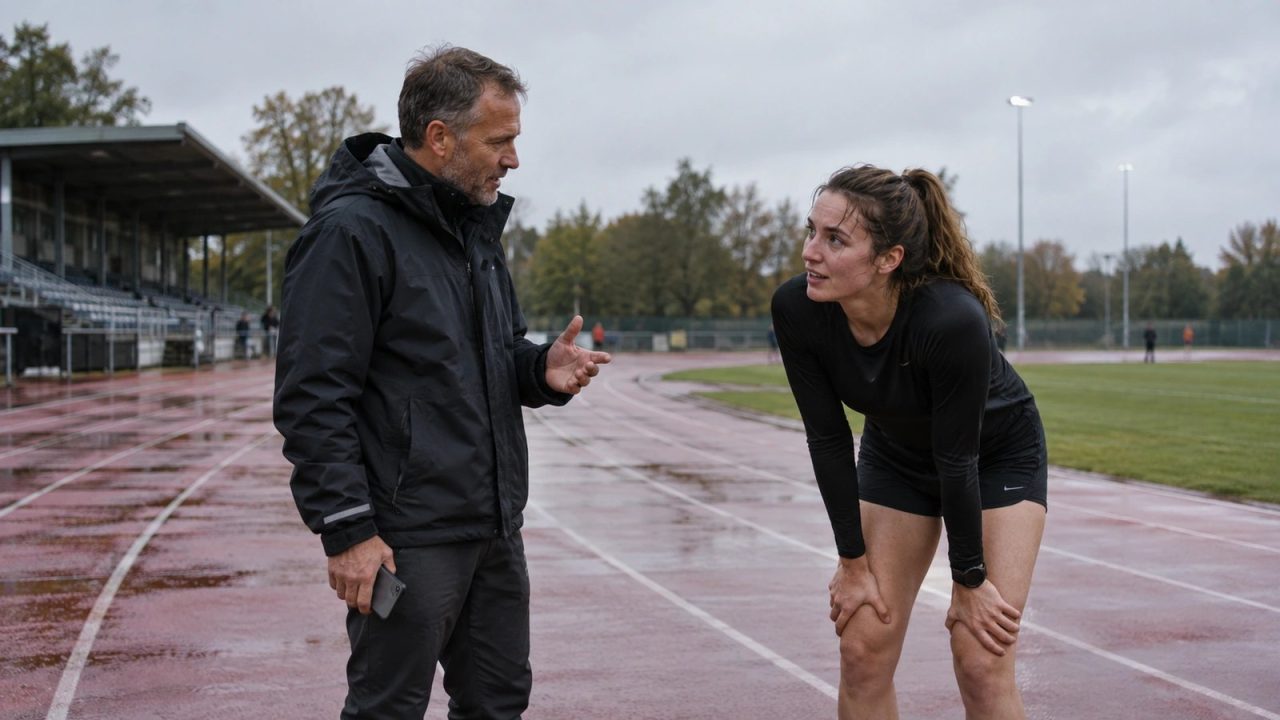
Paper two of six in the Athleet.AI Working Papers on AI in coaching and athlete development, written in the week that chat AI arrived inside mainstream search.
How does a coach actually become expert?
By making a decision, watching what it does to a real athlete, and adjusting. Coaching expertise is formed in the gap between a plan and an athlete, which is why a tool that makes the planning decision does something more consequential than saving an hour.
The paper used an invented composite, flagged as invented. A volunteer at a community athletics club has 40 minutes before a Tuesday session with a mixed group of 13 and 14-year-olds. It is raining, the lead coach is away, and the plan she was sent has not arrived. She asks a phone chatbot for a wet-weather sprint and conditioning session for young teenagers and receives a warm-up, three drills, hill repetitions and a cool-down, each with timings and coaching points. She runs it. Two athletes who returned last month from growth-related knee pain complete the hill repetitions with everyone else, because neither the plan nor her own experience prompted an adjustment. Nobody is hurt that night. She saves the chat and repeats the approach the following week.
What makes chat-based tools different from measurement tools?
They draft the plan, which is the coach’s own product, and they do it in fluent prose that invites acceptance. A dashboard reports numbers a coach must still interpret. A chatbot hands over something that looks finished.
Borrowing a four-part account of what can be automated, the tools sit on analysing information and selecting a decision, which leaves the choice of plan, the function most tied to judgement, as the one most exposed. That matters because the written part of coaching is the smallest part. Expert coaching rests on tacit knowledge that resists articulation, and a text model sees only what has been written down.
Skilled intuition also forms only where feedback is timely enough to learn from. Coaching meets that condition partly at best, since feedback is delayed, noisy and confounded by growth, school, sleep and mood. Removing the practice of deciding makes a difficult learning environment harder still.
What are the four roles AI can take in a planning decision?
The paper’s central framework, and its most portable idea, is that the role is set by the user rather than by the software.
- Reference. The tool answers factual questions about exercises, loads or rules. The decision stays wholly with the coach. The risk is a plausible but wrong answer.
- Adviser. The tool comments on a plan the coach drafted. The decision stays with the coach, better informed. The risk is over-deference to fluent critique.
- Co-planner. The tool drafts options the coach adapts. The decision is shared. The risk is anchoring on the first draft.
- Substitute. The tool produces the plan that is delivered unchanged. The decision belongs to the tool in practice, and both judgement and accountability go with it.
Coaches drift from adviser to substitute on busy weeks without noticing, which is the mechanism the paper is most concerned about. Augmentation and erosion are both true at once, for different coaches. For an experienced coach, AI can extend attention across a group and return time to the relational work athletes value most. For a developing coach, the identical tool removes the practice that builds the judgement in the first place.
What does the erosion actually look like?
The judgement loop runs decide, deliver, compare, adjust. Where a tool made the decision, the comparison has little to teach, and the loop is interrupted rather than accelerated. It does not feel like learning at the time. It feels like homework.
The supporting evidence comes from aviation and process control rather than from sport, and the paper is explicit that this is analogy rather than finding. Automation leaves the operator monitoring and taking over at failure, out of practice at the moment most skill is required. Operators using an expert system showed reduced situation awareness and slower decisions when it failed, with the loss moderated by how much control they retained. Complacency and automation bias appear in experts as well as novices and are not reliably removed by training, which is why even senior coaches should periodically plan without the tool.
No study has tested deskilling in coaching. The paper says so, repeatedly, and asks that the analogy be tested before it is treated as a finding.
What should a governing body and a head of coaching do?
Tie permitted roles to coach development stages. Reference and mentored adviser use in a first qualification. Co-planner once a coach can explain every edit they made. Senior coaches decide for themselves, and plan periodically without the tool to keep the judgement in use. The substitute role should never be permitted with young athletes.
Four design principles follow for anyone building these tools. Show reasoning, by stating the assumptions behind every plan. Invite challenge, by asking what the tool does not know and offering alternatives. Keep ownership, so a named coach accepts, edits or rejects, with changes recorded. Match the stage, letting the tool decide more only as coach judgement is demonstrated.
For coach education the sequence is to keep AI out of the assessed planning tasks where early judgement is formed, while teaching its limitations explicitly, then to include it as a co-planner under observation later. A ban is unenforceable and pushes use out of sight. The paper found no governing body guidance on AI in coach qualifications in February 2023 and asked for some.
The question that has aged most is accountability. Ask of every AI-assisted plan used with children who checked it and on what basis, and record the answer. A good session tonight and a weaker coach in five years is a trade nobody consciously makes, which is exactly why it needs to be made visible.
Free download
Get the full paper
Read The Coach in the Loop in full, with every claim carrying an evidence grade and the full reference list. Give your name and email and the PDF opens straight away.
Frequently asked questions
Is it wrong for a volunteer coach to use a chatbot for a session plan?
The paper does not say so. It says the role matters. Using a tool to check an exercise or to critique a plan you drafted supports your judgement. Delivering a plan you did not write and could not explain hands over both the decision and the accountability.
What is the test of whether you are using it well?
Whether you can explain the plan. If you cannot say why the third element is there, why the volume is what it is, and what you would change for the two athletes back from injury, the tool is in the substitute role whatever you intended.
Does AI save time that goes back to the athletes?
That is the hope and it is untested. The relational dimensions of coaching cannot be delegated to software, and whether saved planning time is actually spent on them has never been measured.
Should athletes be told a plan was AI-assisted?
The paper’s assumption is that disclosure plus visible adaptation preserves trust, and it holds that assumption loosely, because no study in sport has tested how athletes react. Its instinct is that a coach who adapts the plan in front of the athlete has little to fear from saying where the draft came from.
Why not simply ban AI in coach education?
Because it is unenforceable and it removes the chance to teach the limitations. The proposal is narrower: keep it out of the assessed planning tasks where judgement is formed, and teach it everywhere else.
Legal and regulatory notice. This article describes research findings and governance practice. Nothing here constitutes legal advice, and the provision of legal advice sits outside the terms of any engagement with the author or with Athleet.AI. The material is presented to support discussion and further review by qualified advisers.